Daler NAZAROV




About Dad
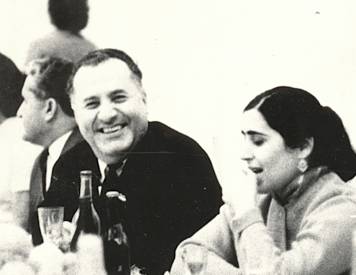
“My love for my parents doesn’t allow me to idealize them. Of course, like many other people, I think my parents are the best in the world.
I am very different from my father.
He felt comfortable in any society… As for me, I spend most of my time alone.
He was always clean-shaven, well-groomed and tastefully dressed… I’m usually not aware of how I look.
He always stayed current with the latest world events… I’m really not well-versed in that.
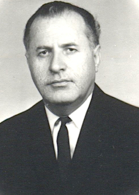
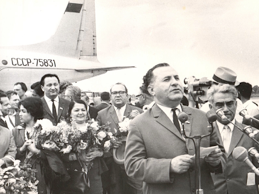
I’d like to talk about the most complex issue that humanity ever had to deal with – I think it’s still far from being solved… It’s the generation gap, the difficult relationship between parents and children. I don’t want to talk about what an important public figure my father was. His friends and colleagues would do this much better.
I never cared about this because I was the youngest one in the family; at that age the only thing that mattered to me was the way my parents were at home.
But I still treasure the values my father taught me at the time when a true brotherhood of nations was a reality. When we were kids, we never had any negative feelings about the USSR, the huge country where people of different ethnicities lived like brothers. Nothing changed for me since then. I keep living in the same wonderful country, and at times it doesn’t make surviving under present conditions any easier – but it does help you stay open-minded, trust people and keep your heart open for everyone.
The really important thing was what me and my father were doing to get over that generational problem.
Dad was consciously trying to solve the issue, while I only started trying when I became older.
I don’t want to go on about how unusual, unearthly and modest my father was. In books and articles people usually appear so perfect – especially those already dead – that you eventually stop taking this information in, because you know it was all written to please somebody. In fact, there is no need to make things up: people are beautiful as they are, and they have so much worth exploring in them.
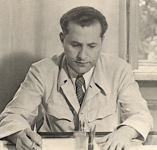
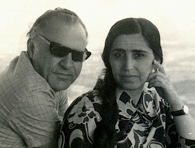

As long as I remember myself, there was always some kind of controversy between me and my father. I wasn’t really pressing my views; I was just trying to demonstrate how progressive-thinking my generation was, and how backwards I found the materialistic worldview that doesn’t allow for any magic or mythology. My father was trying to explain to me that we were talking about the very same things, but it was all in vain. I always wanted to be on the opposite side.
My father used to tell me: “All the things you read in your books – I say them in my toasts; it’s only my wording that’s different”. I thought it to be impossible. For me, the drinking toasts and all the truths I got from my books – some of those books were banned, too – just couldn’t be loaded with the same meaning. It only made me more certain that we didn’t understand each other and never would.
It’s nearly impossible to explain what A FATHER really means for his son… I think he’s the guide who shows you the way to your Spiritual Father; and those two figures may be one and the same after all. This is an eternal force that works inside you non-stop, constantly generating the new strength to go further.
When we talk about “respect for our parents”, what we mean most often is the blind reverence for old age. It would be more natural to talk about “love”, which implies “respect” by nature. Respect doesn’t always let us look deep into one’s soul; only love can do that. One forgets all about age difference and possible misunderstandings: instead, you look inside your friend’s heart, and who you see there is your peer and companion.
Once, after another failed attempt to talk during which I tried to stand my ground yet again, I just retreated into myself and started avoiding conversations altogether. I thought I was reaffirming myself this way. One night, Dad came back home after spending the evening with his friends; I opened the door for him without saying anything and went back up to my room in silence, trying to look very busy to avoid any talking. After a while, my room door opened: my father came in, smiling, and held out something in his palm. “Want some nuts?” he asked. My stubbornness broke into pieces, and so did my dedication to struggle… I started eating those nuts he shared with me. This was a very important lesson and a perfect example of my father’s character.
The civil war began. It eventually reached Dushanbe. The fighting was already approaching our home. We were all very worried; the house was full of kids, too. Mother was very distressed: she tried to keep all the kids safely together, but someone was always scooting away. The atmosphere was very tense. We were hearing gunshots from nearby, as well as voices of unknown militants from unknown sides, with unknown objectives. All communication in the city had stopped days ago; nothing could be heard but shooting… We didn’t know anything about what was going on in the city. Huge tension; complete uncertainty; Mum can’t stop being nervous; I don’t know what to do. Suddenly, Dad appears from his room and says in a completely calm voice against the sound of shooting, as if nothing is going on: “I wonder why no one delivered the newspapers today.” That was a wonderful lesson too; it taught you how to bring the situation back to normal under impossible circumstances. I think, though, that at the moment Dad was feeling extremely uptight because of that terrible senseless violence that was going on in our homeland, in our time…”
D.N.
вторник, 1 февраля 2011 г.
Mehrubon Nazarov